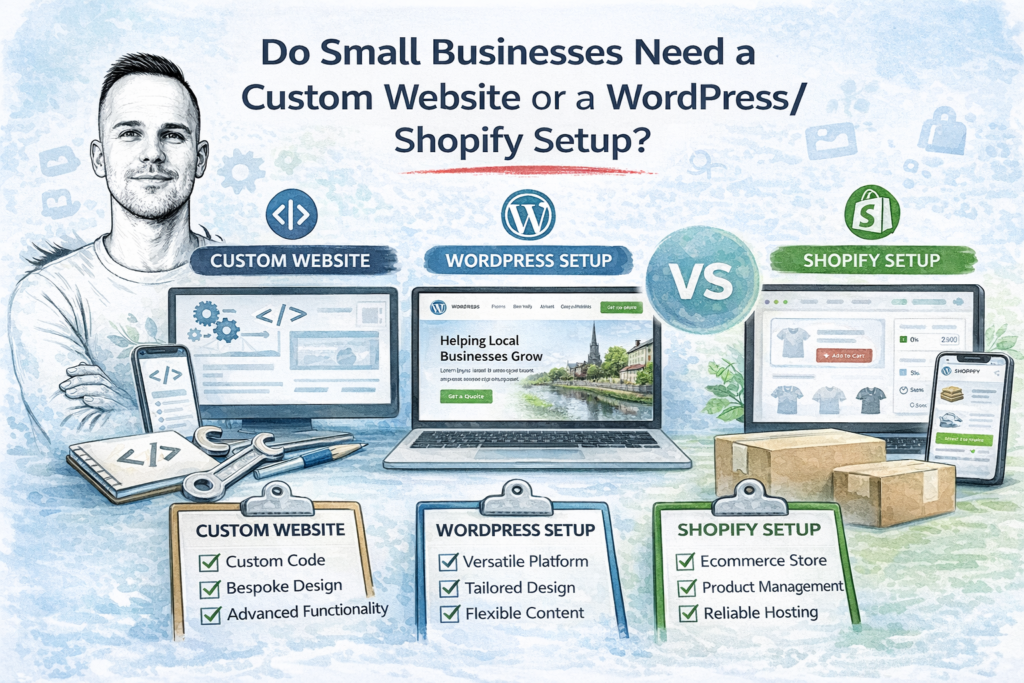
A lot of small business owners assume that a more custom website automatically means a better website.
That is not always true.
For many small businesses, the best website is not the most complicated one. It is the one that fits the business properly, works well, is easy to manage, and gives a solid base for future growth.
In many cases, a good WordPress or Shopify setup makes far more sense than paying for something heavily bespoke.
The right choice depends on what the business actually needs, not just what sounds more advanced.
What People Usually Mean by a Custom Website
When people talk about a custom website, they usually mean a site that is built more specifically around the business rather than set up on a standard platform or theme structure.
That can include:
- bespoke design
- custom-coded functionality
- tailored systems or workflows
- unique user journeys
- custom backend tools
- more advanced integration work
For some businesses, that is exactly what is needed.
But for many small businesses, it is more than they need at the current stage.
What a WordPress or Shopify Setup Usually Means
A WordPress or Shopify setup does not mean “cheap” or “basic” by default.
It usually means building the site on a reliable platform that already handles a lot of the core technical work, while still allowing the website to be properly structured, branded and tailored to the business.
A good setup can still include:
- a strong design
- custom page structure
- tailored content
- service pages
- ecommerce structure
- branding
- blog content
- local SEO foundations
- practical improvements over time
In other words, a platform-based website can still be a very good website.
For Many Small Businesses, Simplicity Wins
A lot of small businesses do not need a complex build.
They need a website that is:
- clear
- professional
- easy to manage
- mobile-friendly
- flexible enough to grow
- built on something reliable
That is where WordPress and Shopify often make sense.
A platform-based site can usually do everything many small businesses actually need, without the extra cost and complexity of something fully bespoke.
When WordPress Makes Sense
WordPress is often a strong option for:
- local service businesses
- consultants
- trades
- brochure-style websites
- businesses that want flexibility
- businesses that want supporting content and blog pages
- service-led websites that need a clear page structure
WordPress is a good fit when the priority is:
- content
- service pages
- local SEO
- flexible page creation
- practical updates over time
For many businesses, it gives more than enough flexibility without overcomplicating things.
When Shopify Makes Sense
Shopify is often the better option when the website is more product-based.
It works especially well for:
- ecommerce businesses
- stores with products and collections
- businesses that need a cleaner product structure
- businesses that want easier store management
- businesses that want reliable ecommerce hosting handled within the platform
Shopify is usually the better fit when the main goal is:
- selling products
- organising collections
- managing stock and store content
- creating a structured online shop without technical hassle
For many smaller ecommerce brands, Shopify makes a lot more sense than trying to custom-build too early.
When a More Custom Website Makes Sense
There are times when a more bespoke website or custom system is the right choice.
That is more likely when the business needs:
- unusual functionality
- custom workflows
- third-party API integrations
- backend systems tailored to operations
- bespoke account areas or tools
- something the usual platforms cannot support properly
That kind of build is more appropriate when the website is closer to being a system or platform rather than a standard small business website.
For the average local business, that is usually not the starting point.
The Wrong Question Is Often Being Asked
A lot of business owners ask:
Do I need a custom website?
The better question is:
What does my business actually need the website to do?
For example:
If you need:
- clear service pages
- a professional design
- a contact form
- local SEO support
- the ability to update content
- a simple store or brochure setup
then a good WordPress or Shopify setup is often more than enough.
If you need:
- advanced integrations
- bespoke user logic
- custom business tools
- complex technical requirements
then a more custom route may be justified.
More Custom Does Not Always Mean Better
A custom website can sound impressive, but it can also bring:
- higher cost
- more development time
- more complexity
- harder maintenance
- greater dependency on the original developer
That does not make custom builds bad. It just means they should be chosen for the right reasons.
A lot of small businesses end up paying for complexity they never really needed.
A Good Setup Still Needs Thought
One mistake people make is assuming a WordPress or Shopify setup means simply installing a theme and leaving it at that.
That is not the standard you want.
A proper setup should still include:
- sensible structure
- clear navigation
- good content
- strong branding
- mobile usability
- page flow
- calls to action
- support for future content or SEO
The platform alone does not make the site good. The way it is built still matters.
Budget Matters Too
For many small businesses, budget is part of the decision.
A more bespoke site usually costs more because it involves more planning, more development work, and more complexity.
That can be worthwhile if the business genuinely needs it.
But if the site really just needs to:
- explain services
- build trust
- generate enquiries
- support local visibility
- sell a manageable number of products
then a good platform-based setup is often a much smarter investment.
Think About the Next Stage Too
The best website choice is not just about launch day. It is also about what happens after.
Ask:
- can the site be updated easily?
- can new pages be added?
- can it support blog content or local SEO later?
- can the business manage small changes without drama?
- is it flexible enough for the next stage?
For many small businesses, WordPress and Shopify are popular because they handle these practical needs well.
The Best Choice Is Usually the Most Sensible One
A small business does not need a custom website just to sound more premium.
It needs the right website for its goals, budget, and stage of growth.
In many cases:
- WordPress is the sensible choice for content-led and service-based websites
- Shopify is the sensible choice for product-based and ecommerce websites
- more bespoke development is only needed when the website has to do something beyond what those platforms can handle properly
Final Thoughts
Small businesses do not automatically need a custom website.
A lot of the time, what they really need is a properly built WordPress or Shopify website with the right structure, design and content behind it.
That usually gives a better mix of:
- practicality
- flexibility
- professionalism
- affordability
- long-term usability
The important thing is choosing the option that matches the business properly, rather than assuming more technical always means better.
Need Help Choosing the Right Setup?
If you are not sure whether your business needs a custom website, a WordPress setup, or a Shopify build, I can help you choose the option that makes the most sense for what you actually need.
Take a look at my Website Design page, check my website pricing, or get in touch to discuss your project.
Need this done properly?
I work directly with small businesses on web design, WordPress fixes, Shopify support and local SEO. No agency overhead.
See web design in Blackburn →